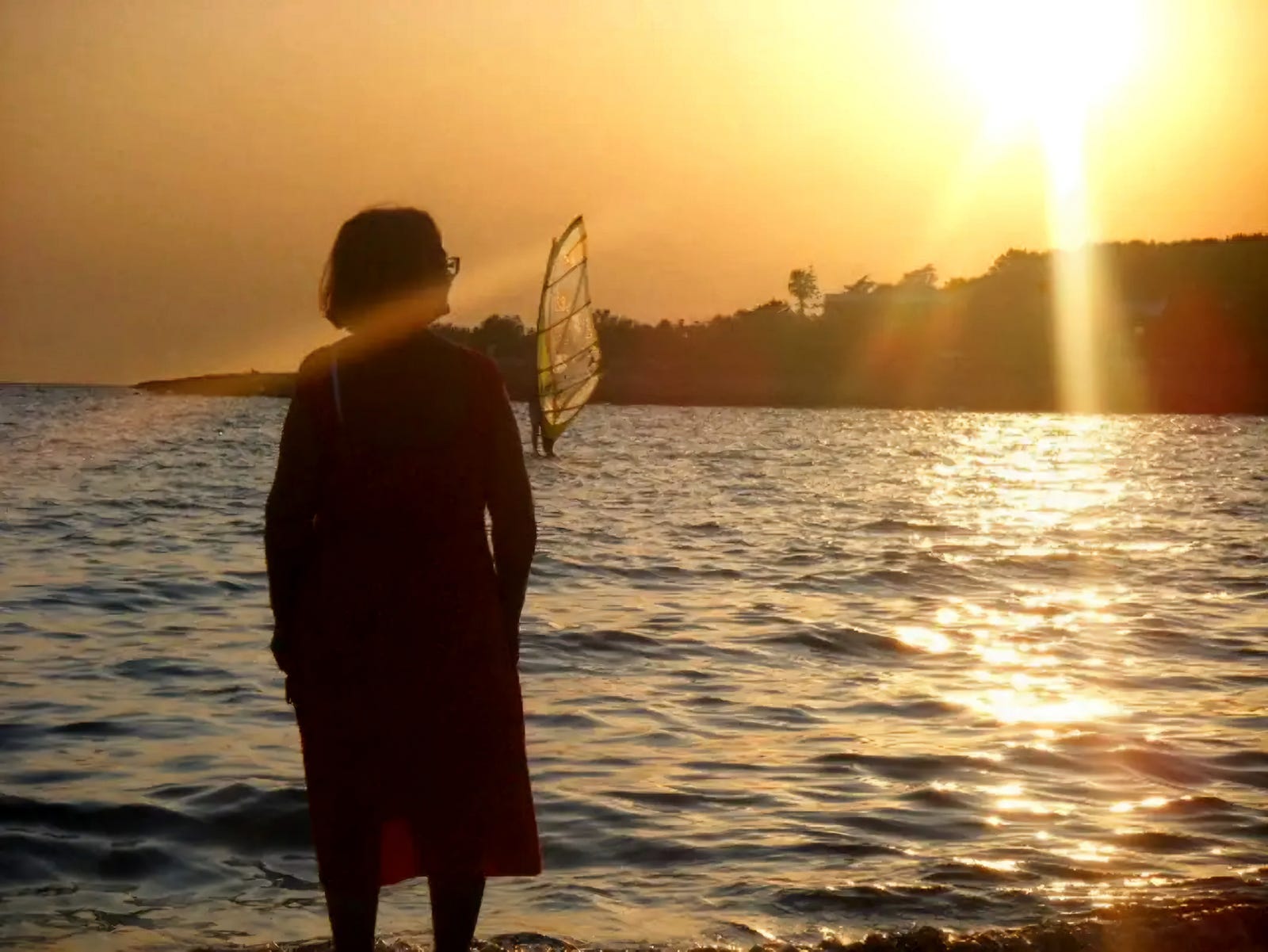
Penelope
Art, Zen, and antidotes: For Tina Bottazzo

How long would you wait for your long-gone lover?
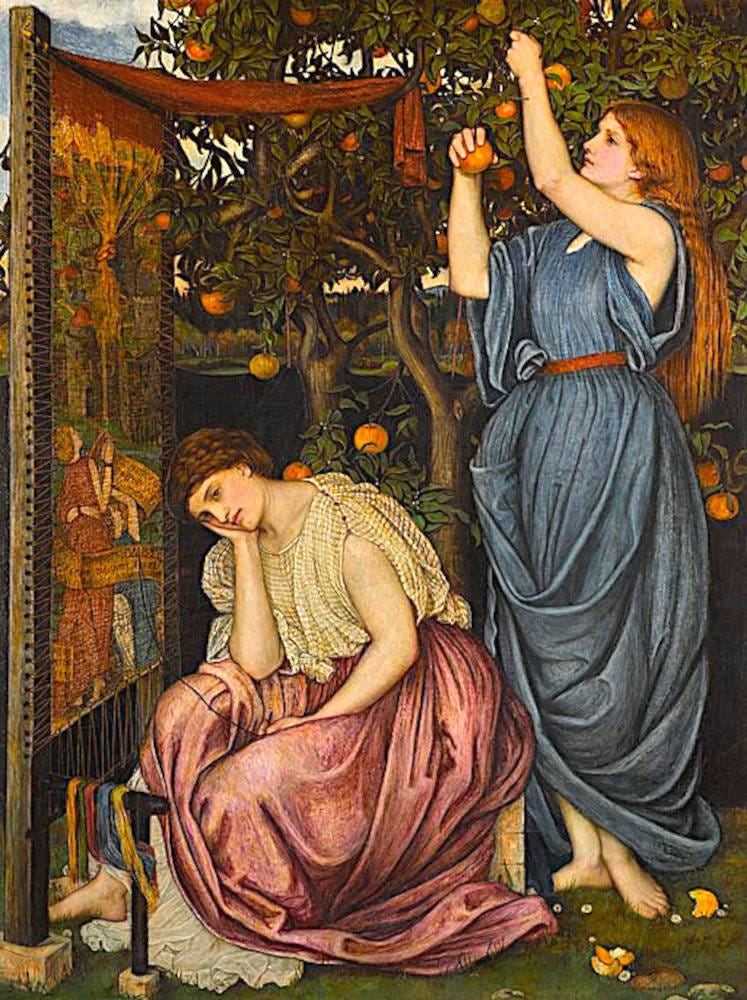
Tired, an eternally young woman loses track of her flow. She is weaving her pain with hope. Where could Ulysses be, after all? How long can the carnage last? And as for the sea, weren’t the Gods on his side?
She waits, but she is exhausted, and inquisitive. After all, suitors are growing restless and resolute, and there’s only so many years a woman can pretend to weave without being found out or growing tired herself.
Will he actually come back, or is she deluding herself? Can she, after all, protect her and her son from a multitude of agitated suitors?
Wondering, her hand still holds the thread with which she writes her longing: Ulysses.
Ulysses, King of Ithaca has departed towards the Trojan wars. Ten years he will fight, and ten years he will take to return. Meanwhile, Penelope remains in Ithaca, besieged by suitors who seek her hand in marriage, believing Ulysses to be dead. Penelope, however, remains faithful to her husband and employs various stratagems to delay choosing a new husband. Her most famous ruse is the weaving of a burial shroud for her father-in-law, Laertes, which she unravels each night to prolong her decision.
In tricks she was as cunning as her infamous husband.
When it came to loyalty, he wasn’t as devoted.
He declared his eternal love for Penelope and remained emotionally fixated on her throughout his journey home but engaged in carnal affairs with other women. I do think he truly loved Penelope, but it was she who really, really, loved him.
Admittedly, there were moments when he didn’t deserve her affection, even less her fidelity. His infidelity (if it can even be called that given the double standards between what was expected from men and women at the time), was probably just the tip of the iceberg regarding his flaws as a man.
It’s a love I struggle to comprehend, originating from a time beyond my understanding. A love, nevertheless.

Illiterate, my grandmother (Nonna) was a woman who had developed her own artistic taste, as well as great empathy towards people and (in the form of sensibility) music. She could also be cunning and fierce.
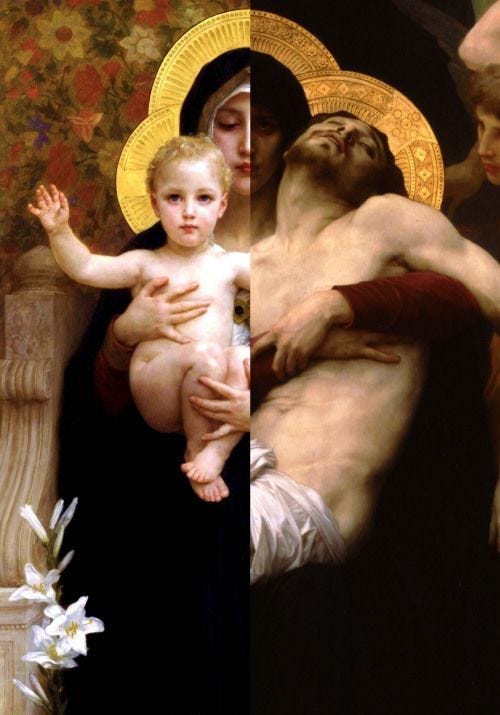
Many, so many, paintings explore grief, loss, death, sadness. But, while some works of art which directly express the themes have come to mind as solace (e.g. O Grave, Where is Thy Victory?), one specific collage has been on my mind as a secular prayer. As my own version of externalising, through observation, sorrow.
The pieces themselves are of course deeply religious, but the feelings of pain and motherly comfort that the collage evokes don’t have to be.
Sure, Nonna was Nonna and not my child. But this is how I feel.
The stitching is from William-Adolphe Bouguereau’s: Regina Angelorum (Queen of Angels) and Pietà. A contraposition that highlights the naturality (cycle of life) and abnormality (child dying before mother) of death. Well, some deaths. While it is possible that this specific piece came to mind given the huge impact it had on me when I first encountered it, I truly believe that what I see first, before a ‘son’ dying, is his vulnerability. First full of life, small, radiant; then collapsed, exhausted even in death.
But then, Penelope, Tina, could be seen as mirror to the figure of Mary. Suffering, loyalty, even though they were offered more nuance in character than Mary was. Still, one might argue that Penelope’s initial motive was to await her husband’s return, but her deeper impetus was to protect her son from the suitors’ threat of death.
Similarly, my grandmother lived—perhaps wrongly—for her children and grandchildren.
Me, guilty: son of Telemachus, I followed an idea of Ulysses, who had an idea of the world and moved over and over to follow it. That is to say, she died while I was far away, on an Ithaca of my own. Could not wrap her in a shroud of my tears.
My grandma: Mary yes, but also Jesus, tired.
My grandfather, well, he was Ulysses through and through. Now, he’s back in Ithaca, and she sees him again… united, into nothingness.
Penelope. You knew it. But since when?
O, sweet embrace of waters and cursive languages.
Shall we meet there again? Every season or at every
prayer for the birth — in honey — of the Sun.
We’ll meet, subject and portrait
at the border of solids
there, Return: like nocturnal waves on the beach.
Can’t you hear the rhythm!? And it’s changing
and
the sea’s stream is crushing
in a cave’s shadow